
We are living through two simultaneous revolutions in software — and most organizations are only seeing one of them.
The first: AI now helps engineers build software. Language models, autonomous agents, and multi-agent systems have become virtual collaborators — peer engineers, architects, analysts, designers — embedded across every phase of the development process.
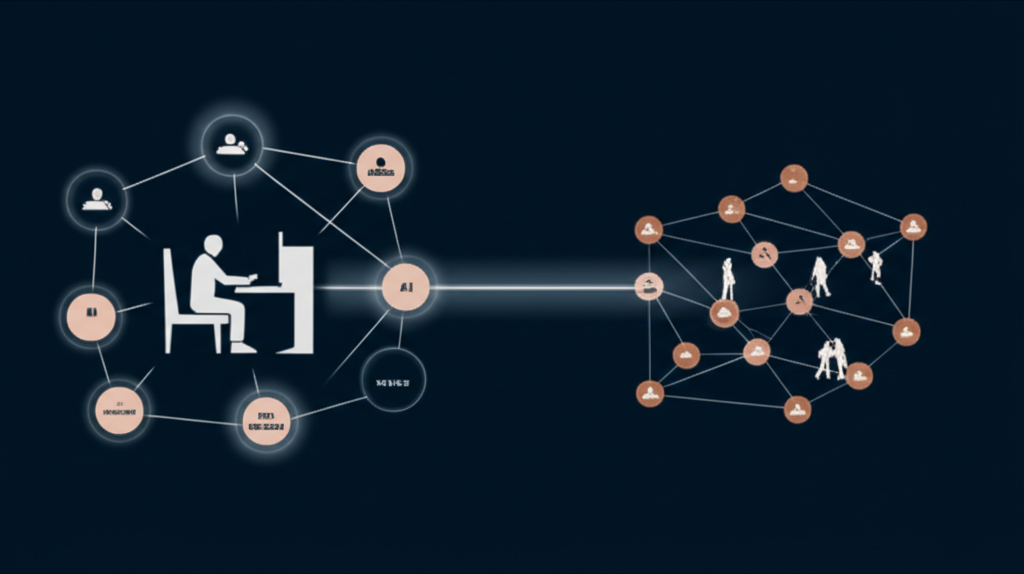
The second, less understood and more consequential: the software we build now uses AI to do its work. The systems being deployed today make decisions, adapt to context, and act autonomously — in genuine partnership with human engineers, executives, and knowledge workers. These are not traditional systems with an AI module bolted on. They are AI-native, and they behave in fundamentally different ways than anything we have built before.
Both revolutions are happening simultaneously. Together, they demand a rethinking of how modern software is envisioned, built, operated, and governed — across its entire lifecycle.
What Is AI-Assisted Software Engineering?
AI-Assisted Software Engineering (AIASE) is the discipline in which artificial intelligence — large language models, multi-agent systems, and autonomous engineering agents — becomes a full-spectrum collaborator in how software is conceived, built, deployed, operated, and eventually retired.
Not a better IDE. Not autocomplete. Not a productivity add-on for individual developers. AIASE is a structural transformation of the engineering function — the difference between an engineer with a faster keyboard and an engineering organization with a fundamentally different capability.
"The organizations that understand the distinction between AI as a tool and AI as a collaborator are the ones building durable competitive advantages right now."
How We Got Here
Every significant era of software development was defined by a shift that changed the leverage available to engineering teams. Understanding the sequence helps calibrate how significant this moment actually is.
Agile liberated teams from waterfall's planning paralysis and established the discipline of iterating in close collaboration with the business. Cloud computing decoupled software from the physical constraints of infrastructure ownership — a two-person team could deploy globally distributed infrastructure in an afternoon. DevOps and continuous delivery eliminated the gap between code and production. GitHub and open source transformed how software is assembled, multiplying the leverage per engineer dramatically.
Each of these shifts rewarded early movers with advantages that compounded over time. The organizations that treated cloud as an infrastructure decision rather than a strategic platform spent the following decade catching up.
Generative AI and multi-agent engineering systems are the next inflection point — larger than any of the preceding ones, because they do not accelerate one phase of the process. They transform all of them simultaneously.
The Problem With Where Most Organizations Are Today
When AI coding assistants became widely available in 2021 and 2022, most organizations deployed them as an individual productivity layer. Output volume increased. Leadership celebrated the metrics.
What many organizations built during this period turned out to be a liability dressed as a win. Critics coined a term for the resulting pattern: "vibe coding" — prompting an AI, accepting what emerged, iterating by feel, and shipping on optimism. The code came fast. The architecture was often undocumented, the security posture untested, the decisions unmade in any explicit way.
The more consequential concern: systems built without explicit architectural intent are expensive to modify and nearly impossible to audit. Undocumented decisions walk out the door with the engineers who made them. Security issues introduced during rapid AI-assisted development do not announce themselves until an incident forces the conversation.
AIASE is what comes after vibe coding — the transition from AI as an individual speed tool to AI as a disciplined, specification-driven engineering function governed by intent, requirements, and accountability at every phase.
Software That Thinks: The Governance Challenge
Traditional software systems are deterministic. Given the same input, they produce the same output — reliably, repeatably, verifiably. That predictability made it possible to test software exhaustively, certify compliance with confidence, and hold systems accountable through periodic audits.
AI-native systems break this contract. A language model embedded in a customer service workflow does not return the same response to the same query every time. A fraud detection model trained on live behavioral data evolves continuously. A multi-agent system makes judgment calls — not deterministic calculations — based on context, training, and inference. These systems have behavioral envelopes, not behavioral certainties.
For executives, the stakes are concrete:
Your governance frameworks were designed for deterministic systems. They do not account for behavior that is probabilistic and evolves without redeployment.
AI-native systems introduce attack surfaces that traditional security testing cannot detect. A system secure last month may not be secure today if the underlying model has drifted.
Architecture decisions sound for deterministic systems require rethinking when behavior is probabilistic. Behavioral monitoring and drift detection are foundational, not optional.
Regulators in financial services, healthcare, and consumer markets are building frameworks to govern AI-powered systems. Organizations not preparing now will face costly remediation later.
Reimagining the Software Lifecycle
AIASE does not simply accelerate the existing development process. It changes what each phase involves, what it produces, and how it connects to the phases around it.
-
01Ideation — The Idea Doesn't Get Lost Anymore
AI-assisted ideation transforms rough spoken intent into structured concept briefs, requirements drafts, and architectural sketches in the same session where the idea forms. The lightbulb moment on the platform is no longer the start of a long, lossy relay race. It starts a build.
-
02Architecture — Decisions Made With Full Visibility
Multi-agent systems evaluate candidate architectures against competing priorities — performance, cost, security, compliance, extensibility — and surface trade-offs explicitly before commitments are made. Security is addressed at design stage, not discovered post-launch.
-
03Documentation — Living, Queryable, Always Current
Documentation is generated continuously from the system itself — not written separately and left to drift. Engineers, compliance officers, and auditors query the knowledge base in natural language and receive answers grounded in current reality.
-
04Testing & Deployment — Validating Behavioral Envelopes
AI-driven test harnesses simulate realistic usage across thousands of scenarios — diverse behaviors, edge cases from historical failure patterns, adversarial inputs. Validation runs continuously in production, flagging anomalies before they become user-visible failures.
-
05Maintenance — Making Systems Legible Again
AI agents read existing codebases and produce semantic maps of what systems do and why. They identify safe modernization opportunities and execute well-scoped improvements with human review at the decisions that matter. The system nobody dared touch becomes readable again.
-
06Continuous Validation — Compliance That Doesn't Expire
AI agents simulate realistic usage against production systems continuously, comparing observed behavior against regulatory requirements and business outcomes. Compliance shifts from periodic audit anxiety to a proactive, always-on governance capability.
-
07Decommissioning — Retiring Systems Safely
Dependencies are mapped systematically. Replacement systems are validated against behavioral equivalence with their predecessors. The system you could never afford to turn off becomes something you can retire with confidence, reducing licensing cost and security surface area.
-
08Cost Intelligence — Full-Lifecycle Visibility
Architectural choices are evaluated against projected operational cost before commitments are made. Code quality translates into estimated future maintenance burden. Total cost of ownership becomes a live, AI-maintained number — not an estimate that nobody updates.
Support: From Reactive to Generative
Software support has always been fundamentally reactive. Something breaks. A user suffers. A ticket is created. A fix eventually deploys. AIASE inverts this by making the software itself a knowledge producer — generating self-updating FAQs from actual user behavior, interactive diagnostic guides grounded in current system state, and knowledge bases that support agents can interrogate to resolve issues without escalation.
The result is not just faster support. It is a fundamentally different economics: fewer incidents, faster resolution, reduced headcount requirements, and higher customer satisfaction — simultaneously.
Why Experienced Practitioners Are the Critical Resource
AIASE is not primarily a technology challenge. It is an organizational and judgment challenge. The tools exist. The models are capable. What organizations consistently underestimate is the gap between access to AI tools and the ability to use them to build trustworthy, governable, production-grade systems at scale.
"The gap between what the theory says and what production teaches you is significant. It is the production lessons that matter most."
That gap is filled by practitioners who have been through this transition — not as observers, but as builders and operators. Who have learned, in production, that the quality of specification determines the quality of output; that multi-agent systems introduce failure modes unlike those in single-model applications; that behavioral drift is real and not caught by traditional monitoring; that documentation generated at build time is dramatically more reliable than documentation retrofitted afterward.
At Bisignani Consulting, this is the work we do. Drawn from the experience of building and operating AI-native systems ourselves — the same experience behind the Friday morning story that opened this article. We engage as practitioners embedded in your engineering organization, bringing hard-won insight and the rigor that turns AI-assisted development from a productivity experiment into a competitive capability.

What Technology Leaders Should Do Now
Assess your current state honestly. How much of your engineering estate was built under vibe coding conditions? Where are the governance gaps that AI-native software will expose?
Define what specification-driven AI engineering means for your organization. Governance frameworks need to be established before the practices scale — not after. The technical debt from vibe coding is still manageable. Let it compound for another two years and it becomes a transformation project.
Treat AIASE as a board-level capability conversation. The organizations that used cloud computing as a strategic platform in 2010 built competitive advantages still paying dividends a decade later. The ones that treated it as an IT infrastructure question played catch-up the entire time. This is the same conversation, earlier in the cycle.