Two Eras Down, a Third Beginning
The web has already reinvented itself once. It is worth remembering both times, because the pattern is the same each time it happens.
In the 1990s, the web was a library. GeoCities pages, static HTML, hyperlinks pointing to more static HTML. You read, and you found information — if you were patient and the page happened to have what you needed. Pages sat and waited. They did nothing on their own.
In the 2000s, the web became a workshop. Amazon, and everything built in its image, turned pages into applications: forms, filters, dashboards, shopping carts. You self-served, and you did — but every action was still yours to perform, click by click, screen by screen. The site got smarter. You still did all the operating.
Talven Tech's thesis is that we are now on the leading edge of a third shift, one that changes the verb again.
“You talk, and it does. You say what you want; the other side handles the operating — human to agent, and increasingly, agent to agent.”
That is the conversational web: intent-driven, not click-driven. You state what you need in your own words, and an assistant that actually understands the business — its rooms, its menu, its inventory, its policies — carries out the rest, using whatever medium the moment calls for. Sometimes that is a sentence. Often it is a photo, a map pin, a price list, or a form filled in for you as you talk.
The Trend Is Already Priced In
This is not a speculative bet on a distant future. The movement has begun, and the numbers already reflect it moving.
$15 trillion in B2B spending is projected to be intermediated by AI agents by 2028, according to Gartner.
$3–5 trillion of global consumer commerce could be mediated by AI agents by 2030, per McKinsey's analysis of the agentic commerce opportunity.
Salesforce's Agentforce closed its most recent fiscal year at $800 million in ARR, up 169% year over year.
Agent2Agent, the interoperability protocol donated to the Linux Foundation, drew 150+ member organizations in its first year alone.
As in the last transition — when the applications web rewarded the businesses that embraced it and left the rest behind — the organizations that treat this as a passing feature rather than a platform shift are the ones exposed. Blockbuster did not lose to Netflix on content. It lost on the interface for reaching the content. Others may go extinct. That is not hyperbole; it is the same sentence that could have been written about static catalog sites in 2005.
It Is Not a Chatbot
The natural objection at this point is reasonable: “We already have a chatbot.” Most businesses do, and most of those chatbots are part of the problem, not a preview of the solution.
A typical text-only assistant, asked something specific, tends to answer in one of two disappointing ways. It either replies in a wall of plain text with no visual grounding — a price with no photo, a policy with no map — or it punts: “Please contact reception to book,” or “Would you like to be connected to a live agent?” Either way, the visitor has done the work of asking and received the same friction they were trying to avoid by not clicking through five pages in the first place.
Replacing a rich website with a plain chat box is not the conversational web. It is a downgrade wearing a chat bubble.
The distinction Talven Tech builds around is this: conversation is a multimedia experience, and conversation is a new data class. A reply can — and should — arrive as a complex scene: an image carousel, a menu with exact prices, a map with a pin dropped on the right building, a composed offer, sometimes all at once. And every one of those exchanges, natively multimedia and multilingual, becomes a source of insight into what visitors actually want that a page view never could be.
What the Conversational Web Actually Delivers
In practice, this is what separates a genuine conversational assistant from a chat widget stapled onto a legacy site.
-
01Rich, Contextual Replies
Answers arrive as the full media a website already has — photos, carousels, menus with real prices, maps, forms — composed into the reply itself, not linked away from it.
-
02Full Journeys, Not Just Answers
Guided, multi-step workflows — a detailed quote request, an event brief, a multi-field form — can be completed conversationally, with the assistant carrying the visitor through each section rather than handing them a static form to fill out alone.
-
03A Console Behind the Curtain
Every conversation is visible, measurable, and steerable from a back-of-house console — the same discipline any customer-facing system requires, applied to a channel that used to be a black box.
-
04One Assistant, Every Channel
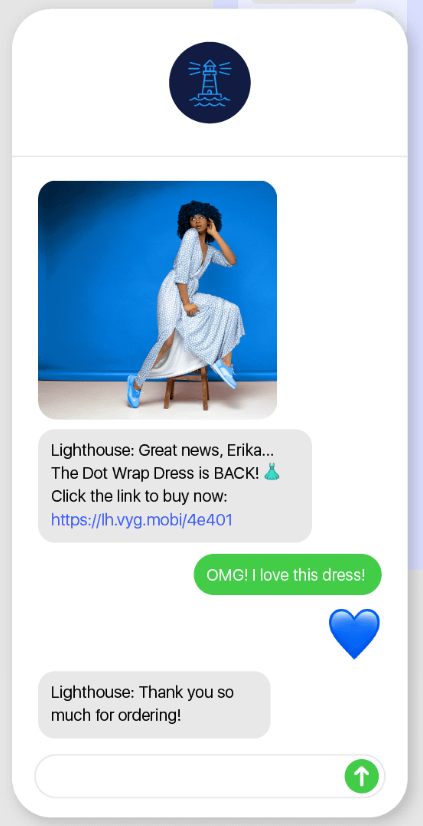
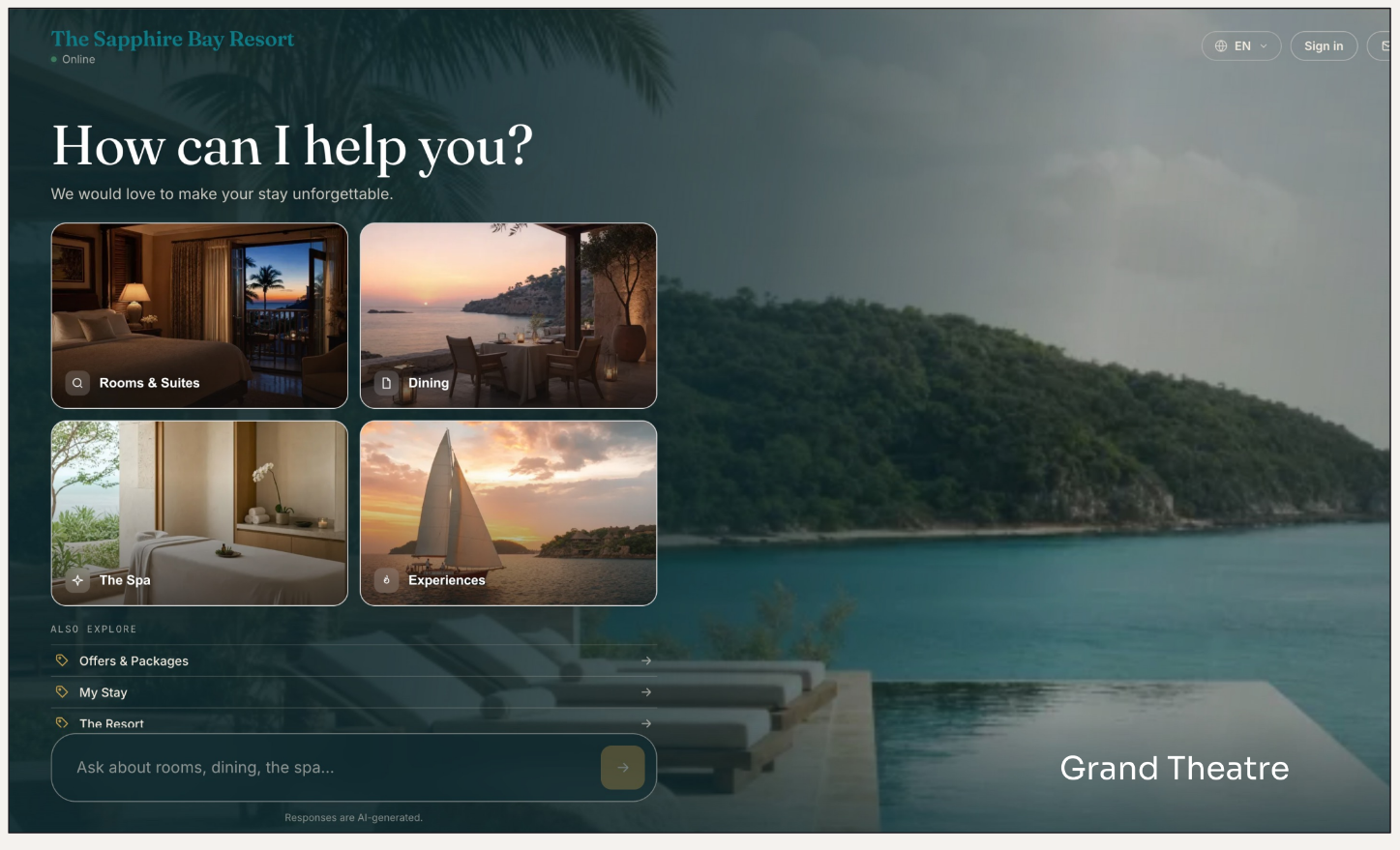
The same underlying conversation projects differently depending on the stage it is given — a grand theatre on desktop, a compact one on mobile, a plain-text one on WhatsApp — without the underlying intelligence changing.
-
05Minutes to Deploy, Not Months
It turns a website a business already has into an assistant — automatically, from the content already published, through a single script tag rather than a rebuild.
Talven Tech's Thesis
Talven Tech's own framing of an agent is direct: “An agent is a business's AI front door — it knows the business, helps customers, and gets things done.” Every product in the Talven lineup is built toward that one front door, at different depths — from Talven Studio Basic, the entry-level chat feature that turns an existing site into an assistant automatically, up to the full Talven Tech CX Studio, the fuller conversational system that handles real actions like holds, requests, and bookings across web and WhatsApp, to the Talven network and Talven Plaza still ahead, aimed at a future where agents are “discoverable by people and by each other” — a city you can talk to.
Notice what that framing does not say. It does not say “surfaces your web content more conveniently.” A front door is not a display case — it is the single point of entry through which things actually get done. Ask a Talven-powered assistant for a late-night room service order, and it does not summarize the menu and wish you luck finding an extension to call. It takes the order. And because the same assistant sits behind whatever door the guest happens to use — the hotel's website, or a WhatsApp link texted at check-in — there is no separate app to install, no hold music, no second conversation to repeat the first one to a different system. One door, every channel, and it gets things done on the other side.
It is for this reason — the conviction that this is not a feature but a new era, and one Talven Tech has already committed itself to — that the company states its aim as plainly as possible:
“Turn Every Website into an Assistant.”
This is not a distant roadmap item.
Turn Every Website into an Assistant.That is Talven Tech's stated aim — and the reason this very site now runs Talven Tech CX Studio in the corner of every page, rather than treating it as a slide in someone else's deck.
Why This Matters for Leaders, Not Just Developers
It is tempting to file the conversational web under “IT will look into it.” That was also the instinct many organizations had toward e-commerce in the early 2000s, and the ones that waited spent the following decade catching up to competitors who did not.
The strategic question is not whether your website should have a chat icon. It is whether the interface between your business and the people who want something from it should still be a stack of pages — or whether it should be able to answer, act, and be measured like any other channel you already take seriously. That is a positioning decision, not a technical one, and it belongs in the same conversation as any other repositioning of comparable scale.
Piloting on real content, with a real console behind it, is a low-risk way to find out what that answer looks like for your organization before a competitor finds out first.
The Era We've Already Joined
Bisignani Consulting does not write about this shift from the sidelines. Talven Tech CX Studio is live on this website today, in the same corner of the screen where a static contact form used to sit. That is the smallest possible proof of a thesis, and also the most honest one: if a firm believes the conversational web is where things are headed, the first place to show it should be its own front door.
The conversational web is not a prediction anymore. It is underway, priced into serious analyst forecasts, backed by real product revenue, and running on real sites — including this one. The only open question is how early your organization joins it.